Project at a glance
- Client: Valero — Jean-Gaulin refinery, Lévis, Quebec
- Asset: fire protection line serving the marine terminal and the wharf
- CNC Mechanical scope: qualified pipefitting workforce, management of the pipe sections and execution of the installation
- Volume: 27 sections installed during the day; replacement of approximately 600 feet of carbon steel pipe
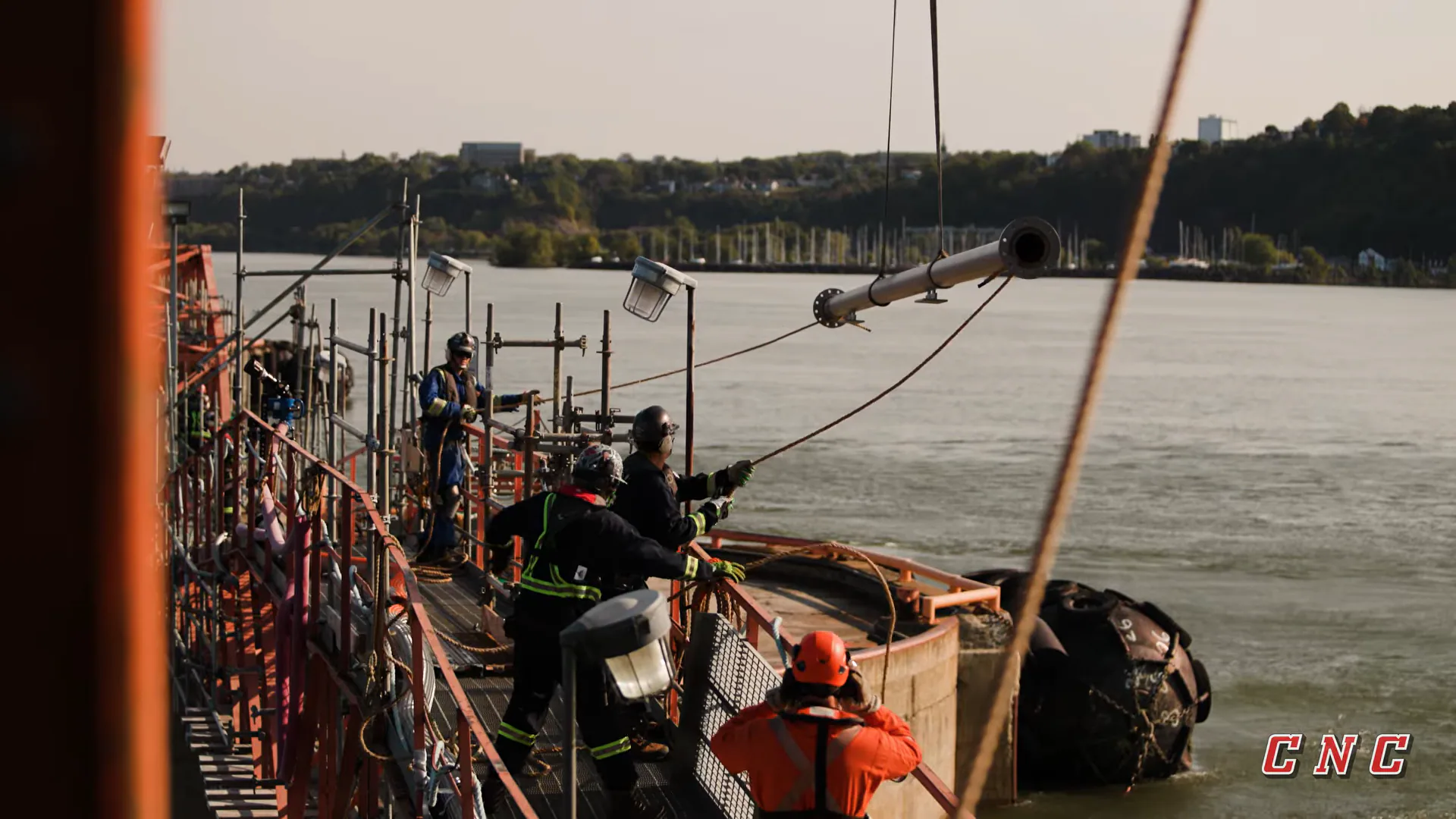
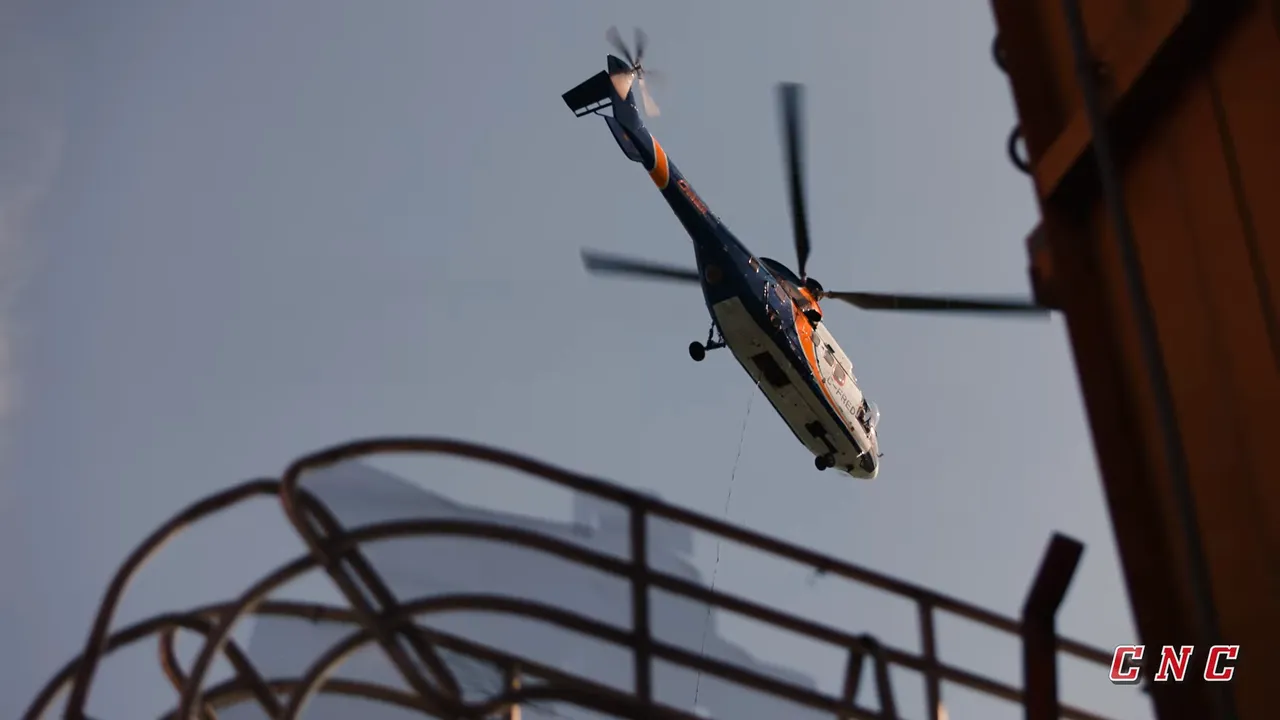
- Method: handling and placement by helicopter, for lack of space for a crane
- Partners: Valero (coordination and workforce), Groupe Deric (signalling), Helicarrier Inc. (air transport), Local 144 pipefitters
- Preparation: several weeks of planning, lift tests, pipe pre-alignment and fallback scenarios
- Outcome: all 27 sections installed on the planned day, safely
- Trades involved: industrial piping, pipe fabrication and installation and multi-party coordination
The challenge: replacing a firewater line without a crane
The line in question protects both the marine installations and the vessels berthed alongside. It has to remain functional: this is a safety asset, not an ordinary process line.
The wharf is a narrow structure, occupied by steel framing, walkways and existing equipment. As Yessine Rebai, the CNC Mechanical project manager assigned to the Valero Lévis site, explains, space congestion was the main issue: it was impossible to use a crane to lift and install the pipe. A helicopter became the most workable method.
Once that method was chosen, the constraint shifted to flight time. The objective for the day was to install as many sections as possible while minimising the helicopter’s time in the air. Every minute of waiting on the ground costs aircraft time.
The preparation, weeks before the lift
This is the invisible part of the project, and the part that explains the result. Before the day of execution, the team had:
- built several sequences and several scenarios, so that surprises could be handled without grounding the aircraft;
- run lift tests;
- identified the correct installation orientation for each section, to avoid any rework in the air;
- pre-aligned the pipe.
All of it served one objective: a smooth, efficient operation on the day.
Safety on an airborne operation
Amandine Belleau, health and safety advisor at CNC Mechanical, was on site. A job safety analysis was produced in collaboration with the various parties, then explained and discussed with the workers.
The hazards identified for this type of operation:
- helicopter downwash;
- dropped load;
- fall into the water.
Controls put in place included sealed goggles against the dust raised by the downwash, and 50-foot tag lines allowing the load to be directed from a distance. Before work started, all workers and stakeholders gathered to review the health and safety rules applying to the day.
This is the logic applied on every one of the company’s worksites: identify the hazards of the actual task, then agree the controls with the people performing it. See health and safety.
What the client says
Alexis Frenette, project engineer at Valero, describes the choice of method and the collaboration it required:
“The method chosen for the replacement is the helicopter. It is the most efficient and the safest of those we evaluated. […] It allowed us to develop new work methods. It was a first time for just about everyone here.”
Christian Mallette, General Manager of Mécanique CNC, points to the outcome of the day: after several weeks of intensive planning, the Valero and CNC Mechanical teams installed all 27 lines as planned, with workers following the instructions and executing the work quickly and efficiently.
A long-standing partnership on the Lévis site
Valero is a significant business partner for CNC Mechanical. At the time of filming, approximately 160 of the company’s workers were present on the Lévis site across various projects — CAPEX work as well as maintenance. CNC Mechanical’s role there is to supply the qualified workforce needed to execute those projects.
That continuous presence is why an operation this unusual could be planned and then executed: the crews know the site, its access constraints and its rules. See also the Valero Energy (Ultramar) record for previously documented piping and shutdown work, and the services offered to refineries.
Discuss a piping project in a constrained environment
Describe the asset, the available access, the space constraints and the work window. The team can then propose a realistic execution method.